
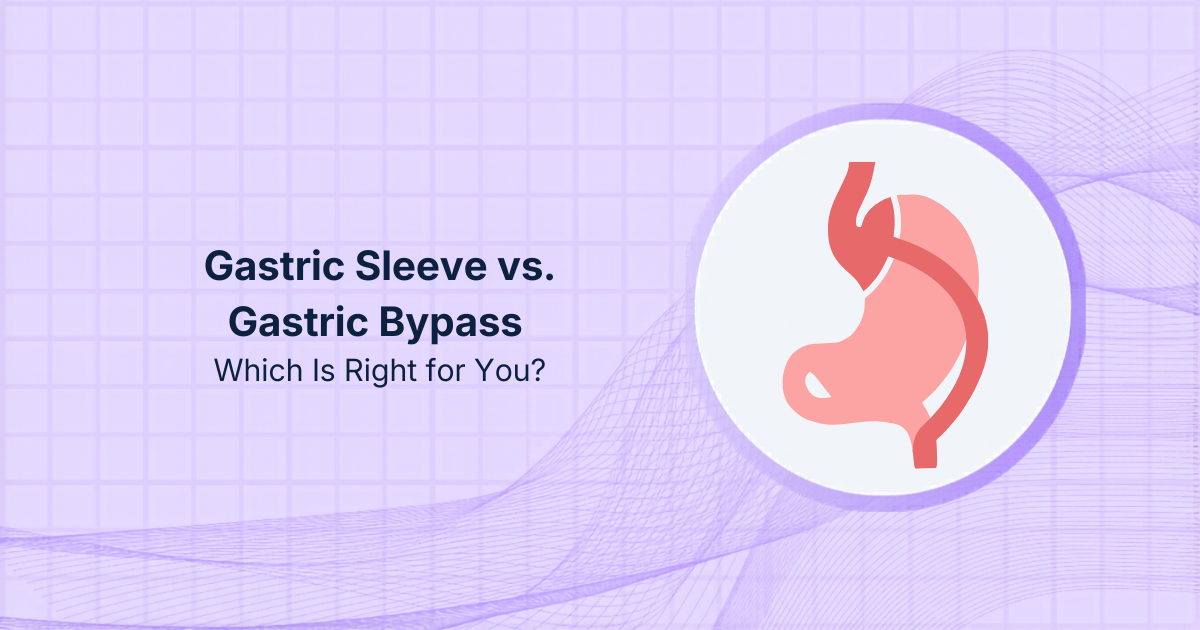
Gastric Sleeve vs. Gastric Bypass: The Differences and How to Choose
Gastric sleeve and gastric bypass are the two most common bariatric surgeries in the world. Both procedures result in substantial weight loss, but they differ in the way they achieve the desired outcome and the risks involved in the process.
According to the ASMBS (2023), sleeve gastrectomy comprises almost 60% of all bariatric procedures performed in the US, while gastric bypass procedures comprise almost 17%. The choice of procedure between these two depends on your BMI, health problems, and long-term objectives.
How Each Surgery Works
1. Gastric Sleeve
Sleeve gastrectomy removes around 75-80% of the stomach, leaving a narrow, banana-shaped tube. Decreased stomach size limits food intake and significantly lowers ghrelin (hunger hormone) production.
- Works through restriction only
- No rerouting of the intestines
- Irreversible procedure
2. Gastric Bypass
Roux-en-Y gastric bypass (RYGB) creates a small stomach pouch and connects it directly to the middle section of the small intestine, bypassing the rest of the stomach and upper intestine (duodenum).
- Works through restriction and malabsorption (reduced calorie and nutrient absorption)
- Involves rerouting of the intestines
- Technically reversible but rarely performed
Gastric Sleeve vs Gastric Bypass: Side-by-Side Comparison
Weight Loss Results: Which Procedure Performs Better?
Both surgeries produce clinically significant weight loss, but gastric bypass consistently delivers slightly greater results, particularly in patients with a very high BMI.
- Gastric sleeve: 50 to 70% of excess body weight lost over 12 to 18 months
- Gastric bypass: 60 to 80% of excess body weight lost over 12 to 18 months
For a person who is 50 kg above their ideal body weight, gastric sleeve produces an expected loss of 25 to 35 kg, while gastric bypass produces 30 to 40 kg of excess weight loss.
According to a 10-year follow-up study published in JAMA Surgery (2022), gastric bypass patients maintained greater long-term weight loss with lower rates of weight regain at both the 5 and 10-year marks.
How Bariatric Surgery Affects Obesity-Related Health Conditions
1. Acid Reflux (GERD)
- Gastric bypass: Improves or resolves GERD in the majority of patients
- Gastric sleeve: This can sometimes make existing GERD worse or cause new acid reflux. For those who already have GERD, gastric bypass is usually the recommended option.
2. Type 2 Diabetes
- Gastric bypass: According to Diabetes Care (2022), 60 to 80% of patients achieve complete remission of diabetes, often within days after surgery, even before major weight loss.
- Gastric sleeve: Shows significant improvement, with around 50 to 60% of patients experiencing remission.
3. Blood Pressure, Cholesterol, and Sleep Apnea
Both procedures produce comparable improvements in blood pressure, cholesterol, and obstructive sleep apnea, with resolution rates of 80 to 85% within 12 months of surgery.
Procedure-Specific Risks to Know
1. Risks of Gastric Sleeve
- Staple line leak along the staple line (1 to 2%)
- GERD symptoms, new or worsening, occur in up to 20%.
- Sleeve dilation decreases the restrictive effect of the sleeve.
- Stricture, or narrowing, which interferes with eating.
2. Gastric Bypass Risks
- Anastomotic leak at the surgical connections (1 to 2% risk)
- Dumping syndrome (nausea, sweating, diarrhea after eating sugar or fat) in up to 20% of patients
- Marginal ulcers at the surgical connection point
- Internal hernias, a rare but serious complication
- Hypoglycemia (low blood sugar) due to excessive insulin release after meals
Who Should Choose a Gastric Sleeve?
Gastric sleeve may be the better option if you:
- Prefer a simpler procedure with a lower complication profile
- Do not have significant acid reflux or GERD
- Have a BMI between 35 and 50
- Have inflammatory bowel disease (IBD) or conditions that make intestinal surgery risky
- Want the option to convert to gastric bypass later if needed
Who Should Choose Gastric Bypass?
Gastric bypass may be the better option if you:
- Have a BMI above 50 and need maximum weight loss
- Have type 2 diabetes and want the highest chance of remission
- Suffer from moderate to severe GERD or acid reflux
- Have not achieved adequate results from a previous sleeve gastrectomy
- Are willing to manage higher nutritional supplementation requirements
How to Choose Between the Two:
- Calculate your BMI and identify any obesity-related health conditions with your doctor.
- List your primary goals, whether maximum weight loss, diabetes remission, or GERD resolution.
- Disclose your full medical history to your bariatric surgeon, including GERD, diabetes, and previous abdominal surgeries.
- Meet with a registered dietitian to understand the long-term nutritional commitments of each procedure.
- Review your insurance coverage, as some insurance plans cover one procedure but not the other.
- Consult with your bariatric care team before making a decision.
Conclusion
Both gastric sleeve surgery and gastric bypass surgery are effective in reducing weight, but the best surgery for an individual depends on their BMI, health conditions, as well as their long-term goals. Gastric sleeve is simpler with fewer nutritional concerns, while gastric bypass has shown better outcomes in diabetes and GERD. Neither of these procedures is possible without modifications in dietary patterns, supplementation, and regular follow-ups. It is best to consult a bariatric specialist and determine which procedure best suits your health condition.