
When Is Surgery Used for Lung Cancer?
Surgery is the preferred treatment for Stage I and II NSCLC when the tumour is localised. Some Stage III patients may be eligible after neoadjuvant chemotherapy or chemoradiation. Pulmonary function and cardiac tests confirm whether the patient can tolerate the procedure. Surgery is rarely an option for small cell lung cancer, which usually spreads early.
Types of Lung Cancer Surgery
The procedure depends on tumour size, location, and the lung function available.
Lobectomy
A lobectomy removes one entire lobe of the lung and is the most common operation for NSCLC. The tumour is removed with a margin of surrounding tissue and nearby lymph nodes; remaining lobes expand gradually to fill the space. A bilobectomy removes two adjacent lobes on the right side when both are affected.
Segmentectomy and Wedge Resection (Sub-lobar Resection)
Used when the tumour is small and peripheral, or when lung function cannot tolerate a full lobectomy. A wedge resection removes the tumour and a surrounding wedge of tissue; a segmentectomy removes a slightly larger anatomical segment. Both are called sub-lobar resections.
Pneumonectomy
A pneumonectomy removes an entire lung and is reserved for centrally located tumours or extensive multi-lobe involvement. Patients can live with a single lung, though exercise tolerance is reduced. It carries higher risk than a lobectomy and is performed less frequently.
Open Surgery vs Minimally Invasive Surgery
Video-Assisted Thoracic Surgery (VATS)
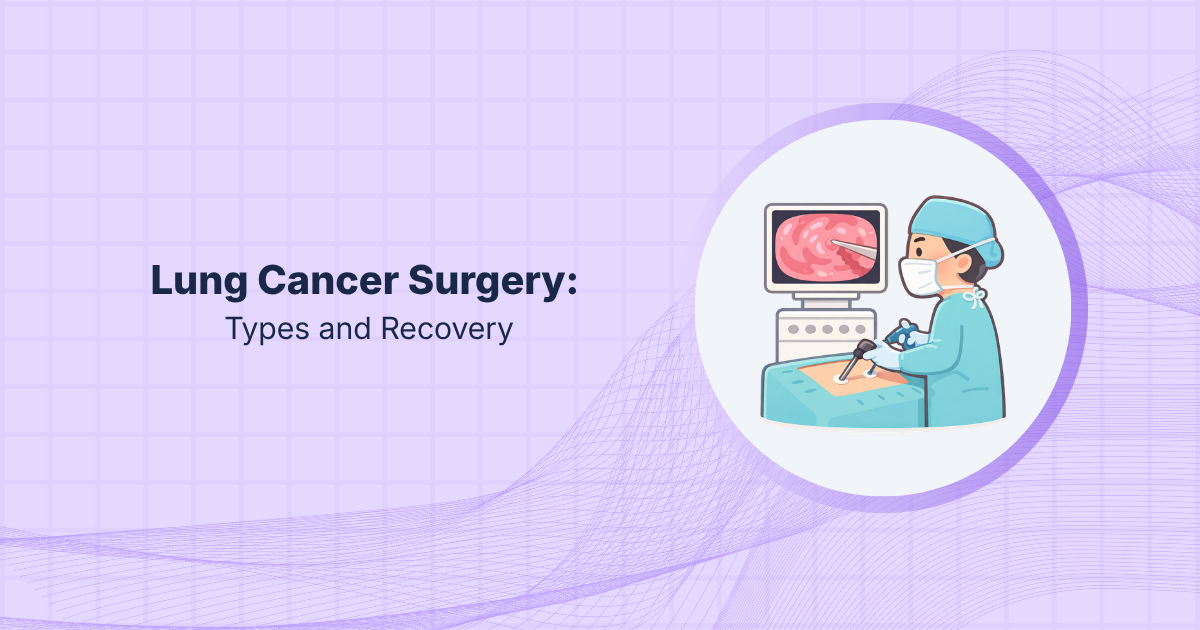
VATS is performed through two to four small incisions, allowing surgeons to insert a tiny camera and specialised instruments to operate on the lung. Because the cuts are smaller than in open surgery, patients usually experience less pain, smaller scars, shorter hospital stays, and a quicker recovery. Most early-stage lung cancer operations at specialist centres are now performed this way. Robotic-assisted surgery (RATS) is a variation that offers greater instrument precision; outcomes and recovery are similar to VATS.
Open Surgery (Thoracotomy)
An open surgery called a thoracotomy involves making a larger incision (about 10-20 cm) between the ribs so the surgeon can directly access the lung. It is usually performed when minimally invasive techniques are not suitable or need to be converted during surgery. Recovery tends to take longer, and some patients may experience ongoing chest wall discomfort compared with VATS.
Preparing for Lung Cancer Surgery
Prehabilitation reduces complication risk and speeds recovery. Your team will advise:
- Stop smoking - even two to three weeks before surgery improves wound healing and reduces anaesthetic risk
- Exercise regularly - walking improves cardiovascular and pulmonary fitness before surgery
- Eat well - a balanced diet supports recovery; a dietitian may advise supplements
- Attend a pre-assessment clinic - one to two weeks before surgery; includes lung function tests, blood tests, ECG, and chest X-ray
- Reduce alcohol intake - lowers risk of bleeding and impaired wound healing
What to Expect in Hospital After Surgery
Hospital stay ranges from one to two days after a wedge resection to one to two weeks after pneumonectomy; most lobectomy patients are discharged in three to five days. You will have a chest drain (removed after two to four days), IV fluids, and pain management via nerve block, PCA pump, or epidural before moving to oral analgesics. A physiotherapist will supervise breathing exercises and early mobilisation to prevent infection and blood clots.
Recovery at Home
Recovery time varies depending on the type of surgery. Most people recover within four to eight weeks after VATS, while recovery after an open thoracotomy may take up to three months.
- Avoid heavy lifting or putting strain on the operated side for about four to six weeks.
- Begin with short daily walks and slowly increase your activity as your strength improves.
- You can usually start driving again after four to six weeks, once you can brake comfortably in an emergency; it’s best to check with your insurer as well.
- Feeling tired or low on energy for several weeks is a normal part of the recovery process.
- Reach out to your healthcare team if you notice signs such as redness around the wound, fever, shortness of breath, or severe pain. Some discomfort or numbness around the scar can persist for a few months, but any new or worsening pain should be checked by a doctor.
Follow-Up and Long-Term Surveillance
A follow-up is typically two to four weeks after discharge. Pathology from the removed tissue will confirm final staging, and adjuvant therapy - chemotherapy, targeted therapy, or immunotherapy - may be recommended. CT surveillance is standard long-term; the risk of developing a new lung cancer is around 2-2.5% per year in the first five years.
Conclusion
When lung cancer is found early and limited to the lung, surgery can offer a strong chance of effective treatment. The type of operation recommended will depend on factors such as the tumour’s size, where it is located, and how well the lungs are functioning. Modern minimally invasive techniques have helped make many procedures less demanding and recovery smoother for patients. Preparing your body before surgery and following your care team’s advice during recovery can make a meaningful difference. Ongoing follow-up scans and check-ups are also essential to track healing and watch for any signs of the cancer returning.