
What Are the Symptoms of Lung Cancer?
Lung cancer often lacks obvious symptoms in its earliest stages, which is why it’s so dangerous. Symptoms usually happen when the disease is advanced and starts affecting your lung function or spreading to other organs. The specific signs can vary depending on the type and location of the tumor.
Recognizing these subtle signs early is your best defense against the illness progressing.
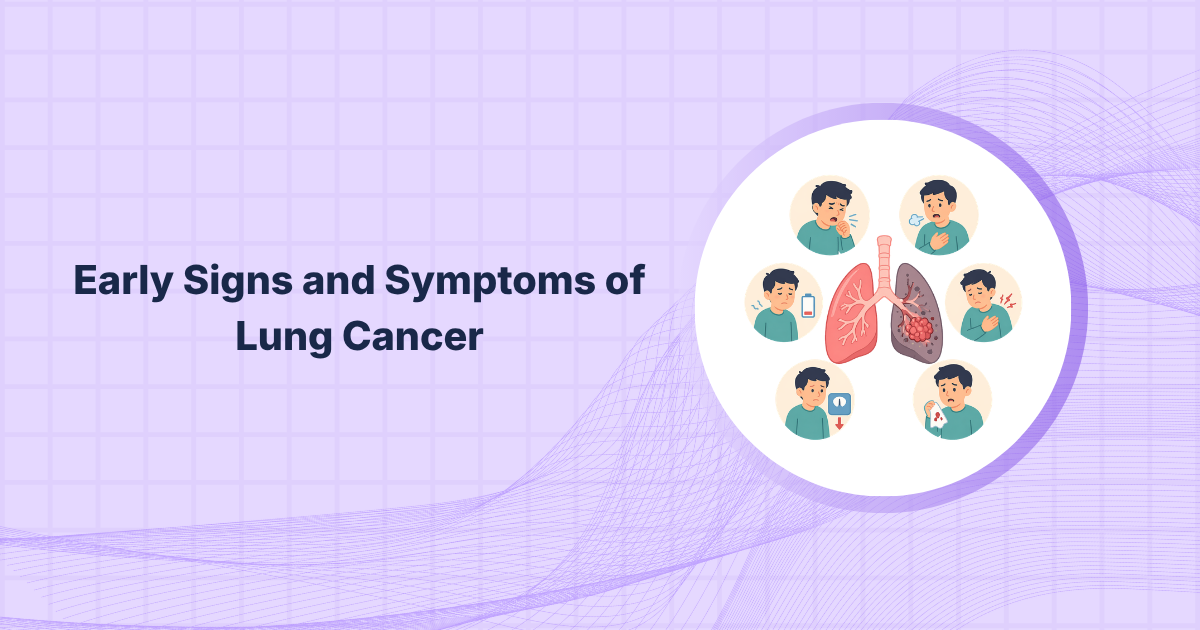
Common Symptoms
- A persistent new cough that stays for longer than two weeks
- Coughing up blood, even a small amount, or rust-colored sputum (hemoptysis)
- Chest pain that can worsens with deep breathing, coughing, or laughing
- Hoarseness or unexplained changes in your voice
- Significant, unexplained weight loss without putting any effort into a diet
- Loss of appetite
- Shortness of breath, even during light activity, as air passages become blocked
- Constant fatigue and feeling drained even after adequate rest
- Recurring respiratory infections, such as bronchitis and pneumonia, that keep coming back or won’t get better
- New onset of wheezing
Symptoms from Lung Cancer Spread (Advanced Signs)
If the cancer has spread beyond the lungs to other parts of the body, you might experience additional late-stage symptoms like these:
- Aching bone pain or joint pain, especially in the back or hips
- Neurological changes, such as headaches, weakness, dizziness, or numbness
- Jaundice (yellowing of the skin and eyes)
- Swollen lymph nodes or lumps in the neck or above the collarbone
- Unexplained swelling in the face or neck
Got some questions about your symptoms or test results?
Want to get some personal advice from a doc without having to leave the house? If you've got a persistent cough, chest pain, or just a general feeling of losing weight for no reason, you might want to consider reaching out to a doctor online.
These signs often go unnoticed in early stages, making regular checkups crucial - if you’re experiencing any of these, speaking to a doctor online can provide immediate clarity and help you take control early.
What Are the Risk Factors and Causes?
Smoking cigarettes remains the leading cause of lung cancer, but people who have never smoked can also develop the disease. Exposure to certain elements significantly increases your risk:
- Smoking: The more years you've spent smoking and the more cigarettes you've crunched through, the higher your risk gets
- Secondhand smoke: Breathing smoke from others.
- Radon gas: Exposure to naturally occurring radioactive gas in homes or buildings.
- Carcinogens at work: Exposure to substances like asbestos, arsenic, chromium, and nickel.
- Family history: Having a parent or sibling with lung cancer.
- Previous radiation therapy: Prior treatments directed at the chest.
What Does Treatment Look Like?
Your treatment plan is all about you - how healthy you are, how far the tumour has spread and what you're willing to put up with. For related pulmonary care information, read our resources on respiratory health.
Primary Treatments
- Surgery: Basically, the aim is to get in there and safely remove the lung cancer and a bit more of healthy lung tissue around it just to be on the safe side.
- Radiation Therapy: this is something that uses high powered energy beams to knock out cancer cells before or after surgery
- Chemotherapy: Uses oral or intravenous drugs to kill cancer cells.
- Targeted Therapy: Blocks specific abnormalities present within cancer cells to cause cell death.
- Immunotherapy: Uses your immune system to fight cancer by interfering with how cancer cells hide.
How to Prevent Lung Cancer?
While there is no guaranteed prevention, you can significantly reduce your risk by minimizing exposure to carcinogens.
- Stop smoking: This is the most crucial step. Quit now to lower your risk.
- Avoid secondhand smoke: Avoid areas where people smoke.
- Test for radon: Have the radon levels in your home checked.
- Avoid workplace carcinogens: Protect yourself from toxic chemicals at work.
- Eat healthy: Choose a diet with a variety of fruits and vegetables.
What to Expect During Diagnosis
If your doctor suspects cancer, they will likely order tests to confirm the diagnosis and stage.
- Imaging tests: X-rays or CT scans can reveal abnormal masses, nodules, or small lesions.
- Sputum cytology: Looking at sputum under a microscope can sometimes reveal cancer cells.
- Biopsy: Removing a tissue sample is the only way to definitively confirm cancer.
Conclusion
Lung cancer can sometimes start slowly, and symptoms can be minor and easy to ignore. Persistent changes that do not resolve over time, such as a cough that does not go away, unexpected weight loss, and tiredness that lingers, can make a real difference in the detection of lung cancer. Though these changes do not mean that a person has cancer, it is important that these changes should not be ignored. Taking simple precautions such as avoiding smoking and substances that can harm your lungs and visiting your doctor for checkups can make a great difference in your health.