
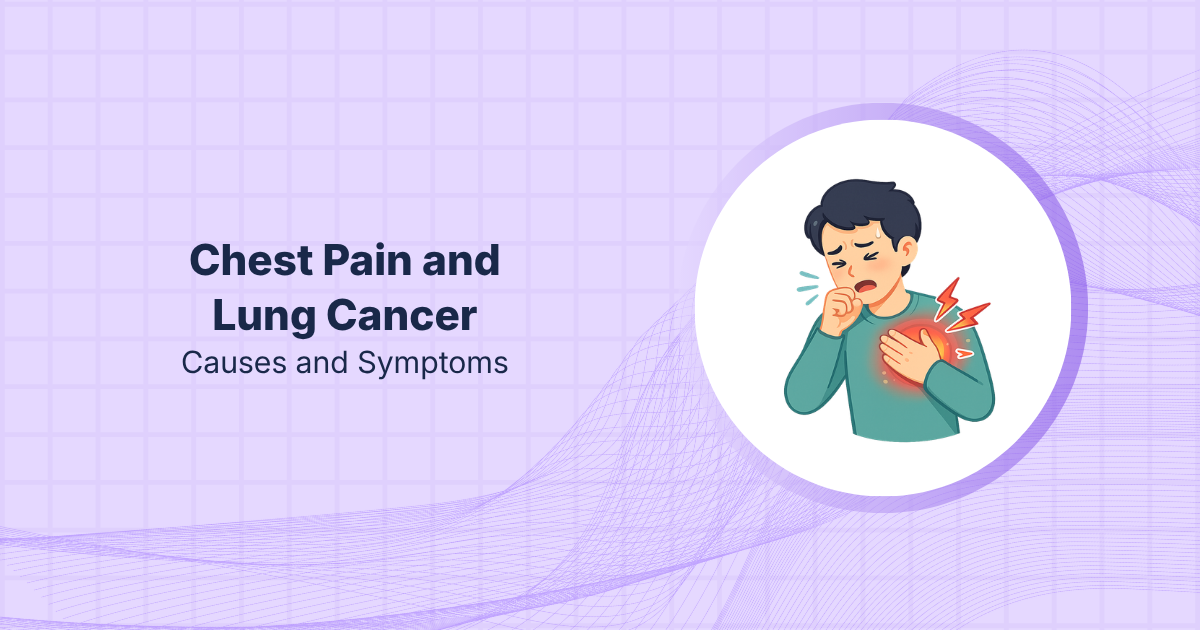
Chest Pain and Lung Cancer: Causes and Symptoms
Feeling chest pain can be very worrying, and it’s common to fear the worst, like a heart attack or lung cancer. While chest pain is a frequent symptom in people with lung cancer, it can also be caused by many less serious issues, such as acid reflux or muscle strain.
Knowing what lung cancer chest pain feels like, where it starts, and what other symptoms usually come with it can help you decide if you need to see a doctor right away or just keep an eye on your symptoms.
What Does Lung Cancer Chest Pain Feel Like?
Heart attack pain is often described as sudden and crushing, but lung cancer chest pain can feel very different for each person. Since the lungs have few pain receptors, the pain usually happens when cancer affects nearby tissues, nerves, or the chest wall.
In case the pain is due to lung cancer, you might experience:
Common Sensations
- A constant, dull ache or feeling of pressure deep in the chest
- Sharp, stabbing pains that occur sporadically
- A tight, burning sensation that can radiate to your shoulders, neck, or back
- Pain that noticeably worsens when you take a deep breath, laugh, or cough
What Causes Chest Pain in Lung Cancer?
If your doctor finds that lung cancer is causing your chest pain, there are several reasons for the discomfort. It’s not always just the tumor itself that leads to pain.
Tumor Pressure and Growth
- Nerve compression: As a primary lung tumor grows, it can press against the chest wall, ribs, or the intricate network of nerves surrounding the lungs, leading to sharp or aching pain.
- Bone metastasis: In advanced stages, lung cancer can spread (metastasize) to the ribs or spine, causing deep, aching bone pain.
Lung Cancer Complications
- Pleural effusion: Fluid can accumulate in the lining outside the lungs because of cancer. The accumulation leads to inflammation, pressure and shooting pain while inhaling.
- Pulmonary embolism: Lung cancer patients are more likely to develop blood clots. A blood clot that travels to the lungs brings on sudden, sharp chest pain and is a medical emergency.
Treatment-Related Pain
Recovery from surgery: Pain due to chest tubes or surgical incisions may last for a long time after surgery.
Radiation therapy: If someone has had radiation to the chest, it may cause inflammation, heartburn, and localized pain.
Other Symptoms to Watch For
Chest pain is seldom a lone symptom of lung cancer. It is almost invariably associated with other systemic or respiratory red flags.
If your chest pain is paired with any of the following, consult a doctor immediately:
- A persistent, new cough that lasts more than eight weeks
- Coughing up rust-colored sputum or blood (hemoptysis)
- Unexplained weight loss and a sudden drop in appetite
- Recurring respiratory infections like bronchitis or pneumonia
- Unexplained fatigue and weakness
What Else Could Cause Chest Pain?
Recognize that chest pain is a common symptom of many treatable conditions before becoming alarmed about lung cancer.
- Gastrointestinal problems: Burning chest pain that resembles heart or lung problems can be caused by acid reflux disease (GERD) or gallbladder issues.
- Respiratory infections: Coughing up pneumonia, bronchitis, or the flu can cause excruciating chest pain.
- Musculoskeletal issues: Sharp chest wall pain may be caused by shingles, strained muscles, or damaged ribs.
- Angina or a heart attack are heart conditions. A heart attack is an unexpected medical emergency that frequently spreads to the jaw or left arm.
Conclusion
Not every chest pain is cancer. Its important to differentiate between the two. Chest pain that worsens with deep breathing or coughing often goes unnoticed as a serious sign in early stages, making regular checkups crucial. If you're experiencing persistent chest discomfort alongside a cough, speaking to a doctor can provide immediate clarity and help you take control early.