
What Is Radon and Where Does It Come From?
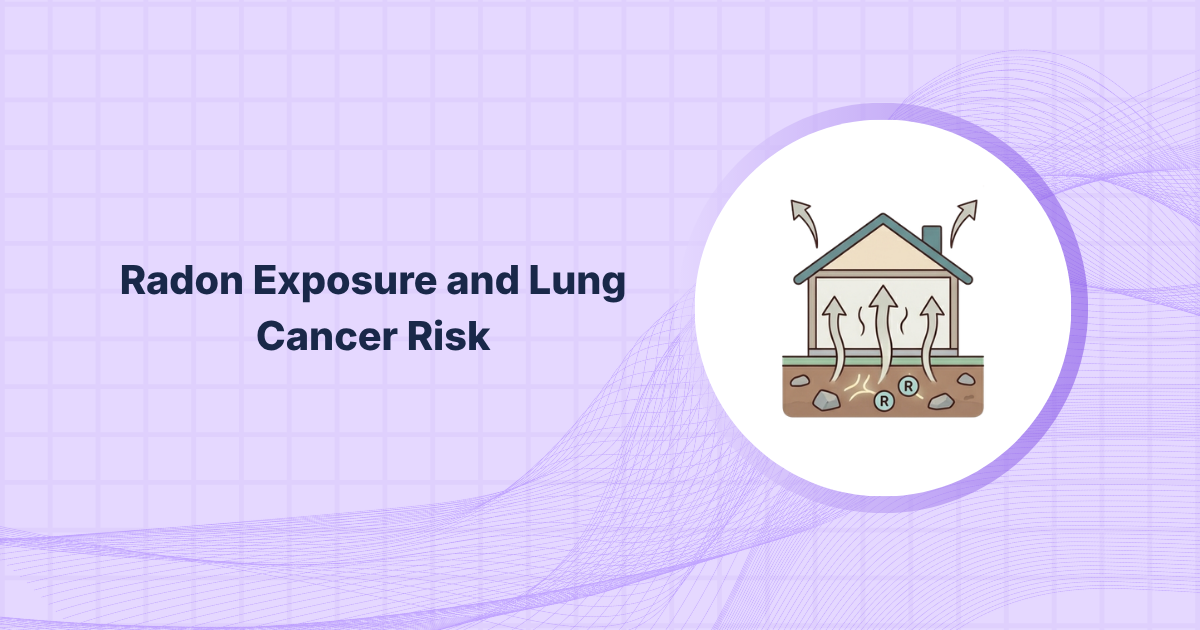
Radon is a radioactive gas that occurs naturally. It is produced by the decay of uranium in soil, rock, and water. It rises through the earth and enters buildings through cracks in foundations, gaps around pipes, and construction joints.
Radon can accumulate to dangerous levels mostly in basements and poorly ventilated rooms. It has no smell, colour, or taste, so it is impossible to detect without a test.
How Does Radon Cause Lung Cancer?
When radon decays, it releases tiny radioactive particles called radon progeny. These can be inhaled and become lodged in the lining of the lungs. Once trapped, they emit radiation that directly damages the DNA of lung cells. Over time, this accumulated DNA damage can cause lung cells to mutate and grow uncontrollably which is how cancer develops.
Research published in the Journal of the Brazilian Society of Pulmonology, alongside multiple international studies, identifies radon as a major factor of lung cancer in non-smokers. Among never-smokers, it is the single leading environmental cause of the disease.
How Much Does Radon Increase Lung Cancer Risk?
Radon and Non-Smokers
Radon exposure alone increases lung cancer risk. Combined with smoking, the risk becomes far greater than either factor alone.
According to the American Cancer Society, a smoker living in a high-radon home faces a lung cancer risk roughly 10 times higher than a non-smoker in the same home. Cigarette smoke damages the lungs' ability to clear inhaled particles, meaning radioactive radon progeny remain trapped in lung tissue for longer.
This interaction makes radon testing especially critical for anyone who smokes or lives with a smoker.
Who Is at Risk and Where Does Radon Build Up?
Any building can have elevated radon levels new homes, old homes, well-sealed homes. Some geographic areas naturally have higher uranium concentrations in the soil, increasing local radon levels, but no region is entirely free from risk.
Within a home, levels are typically highest in basements and ground-floor rooms that are in direct contact with the soil. Rooms on higher floors tend to have lower concentrations due to better ventilation and greater distance from the source.
The only reliable way to know whether your home has a radon problem is to test it.
What Are the Symptoms of Radon-Related Lung Cancer?
Because radon is invisible, there are no physical warning signs of exposure. Lung cancer caused by radon typically takes years or decades to develop and may not produce symptoms until it is advanced. Symptoms can include a chronic cough, chest pain, shortness of breath, and unexplained weight loss.
How to Test and Protect Your Home from Radon
- Test your home - Radon test kits are available at hardware stores and online. Short-term kits take two to seven days; long-term kits give a more accurate reading over 90 days or more.
- Know the safe levels - The US Environmental Protection Agency recommends action if radon levels reach 4 picocuries per litre (pCi/L) or higher. Levels between 2 and 4 pCi/L may also warrant mitigation.
- Install a mitigation system -A certified contractor can install a sub-slab depressurisation system, which vents radon from beneath the building to the outside. These systems can reduce levels of radon by up to 99%.
- Seal entry points - Filling cracks and gaps in the foundation limits the amount of radon that can enter your home.
- Retest after mitigation - Once a system is installed, retest your home to confirm levels have dropped to a safe range.
Conclusion
Radon is a serious and hidden health risk as it cannot be seen or smelled. Long term exposure can damage the lung cells and increase the risk of lung cancer even in individuals who never smoked. However, the good news is that radon can be detected and its level can be reduced. Taking simple steps of testing your homes and taking steps to reduce radon exposure can protect your helath in the long run.