
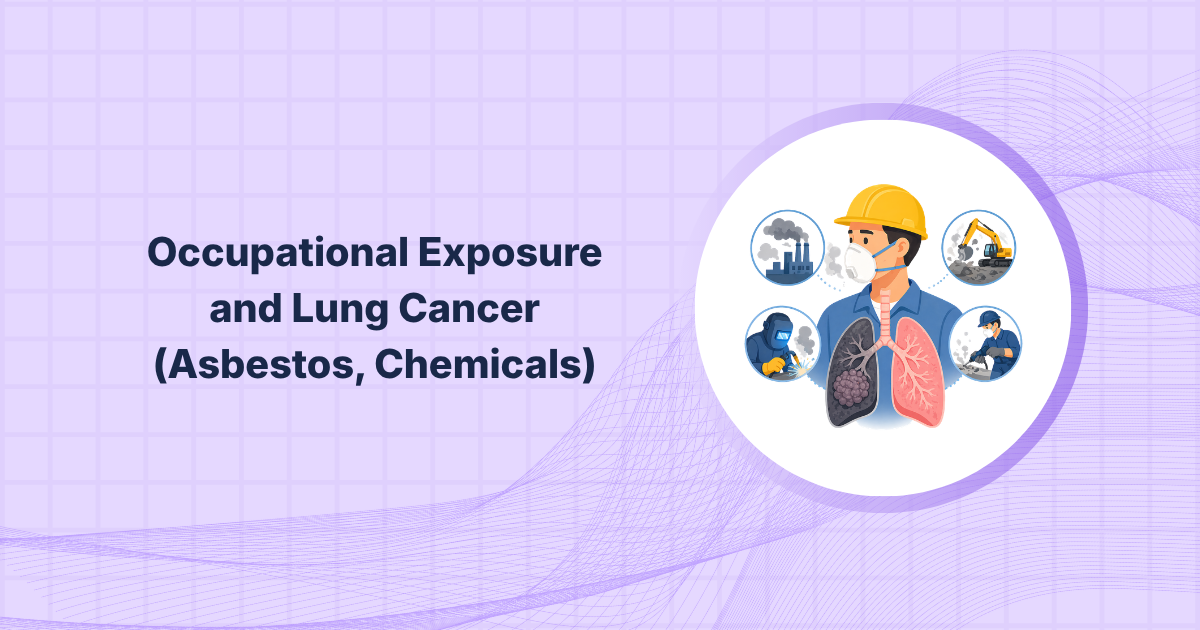
How Does Asbestos Cause Lung Cancer?
Asbestos is a group of naturally occurring mineral fibres used widely in construction, shipbuilding, insulation, and manufacturing throughout the 20th century. When asbestos-containing materials are disturbed, microscopic fibres are released into the air and can be inhaled into the lungs.
Once lodged in lung tissue, these fibres cannot be expelled by the body. Over years and decades, they trigger persistent inflammation and scarring that gradually damages the DNA of lung cells. This accumulated damage is what leads to lung cancer, as well as other serious diseases such as mesothelioma and asbestosis.
The National Cancer Institute confirms that occupational asbestos exposure significantly raises the risk of developing lung cancer. A systematic review published in PubMed further establishes this link across multiple industries and populations.
Workers who smoked and were also exposed to asbestos face a risk that is far greater than either factor alone. This combination multiplies lung cancer risk substantially making smoking cessation especially critical for anyone with asbestos exposure history.
Who Is Most at Risk from Asbestos?
Occupations with high asbestos exposure include:
- Construction and demolition workers
- * Shipbuilders and naval workers
- * Insulation installers
- * Plumbers and pipefitters
- * Electricians in older buildings
- * Automotive mechanics working with brake and clutch components
- The usage of asbestos has been heavily regulated from the 1980s onwards in most countries; however, there is a high chance that most structures built before that period may contain asbestos.
Other Workplace Chemicals Linked to Lung Cancer
While asbestos receives the most attention, several other workplace substances also carry confirmed links to lung cancer:
- Arsenic - Used in smelting and semiconductor production. Long-term inhalation significantly raises lung cancer risk.
- Hexavalent chromium - Found in chrome plating and stainless steel welding. A known carcinogen that causes direct DNA damage in lung cells.
- Silica dust -Common in quarrying, glass-making, and bricklaying. Inhalation causes silicosis, which increases lung cancer risk.
- Nickel compounds- Present in nickel refining and electroplating. Associated with elevated rates of lung and nasal cancers.
- Diesel exhaust - Mechanics, truck drivers, and dock workers face regular exposure. Long-term inhalation of diesel particles is a confirmed cause of lung cancer.
- Beryllium - Used in aerospace and electronics. Classified as a human carcinogen with confirmed lung cancer risk.
- Coal dust and coke fumes -Workers in coal mines and steel production face exposure to complex carcinogenic mixtures.
Why Occupational Lung Cancer Is Often Diagnosed Late
One of the most challenging aspects of occupational lung cancer is the long latency period between exposure and diagnosis. Cancers related to asbestos and other workplace carcinogens typically take 20 to 40 years to develop. This means workers exposed in the 1970s and 1980s may only now be experiencing the health consequences.
It also means many people do not connect their current diagnosis with a workplace they left decades ago. Documenting your occupational history - including the industries you worked in, substances handled, and duration of exposure - is important information for your doctor when assessing risk.
How to Protect Yourself from Occupational Lung Cancer
- Know your exposure history - Keep a record of your work history, particularly if you have worked in construction, mining, shipbuilding, metalworking, or heavy industry.
- Use respiratory protection - Always wear properly fitted respirators when working around hazardous dusts and fumes.
- Ensure proper workplace ventilation -Adequate airflow significantly reduces the concentration of airborne carcinogens.
- Stop smoking -Smoking combined with occupational carcinogen exposure multiplies lung cancer risk dramatically. Quitting is the single most important protective step a worker can take.
- Report unsafe conditions - If you believe you are being exposed without adequate protection, raise concerns with your employer or a health and safety representative.
- Discuss screening with your doctor - If you have significant exposure history, ask about low-dose CT lung cancer screening.
Conclusion
Long-term exposure to harmful substances at work like silica, asbestos, or industrial chemicals can increase the risk of lung cancer, often many years after the exposure occurs. Because these risks may not show symptoms for decade. Thius it is important for workers to be aware of their exposure history and take safety precautions. Using safe equipment, ensuring safe workplace practices, and discussing past exposures with a doctor can help reduce risk and support early detection.