
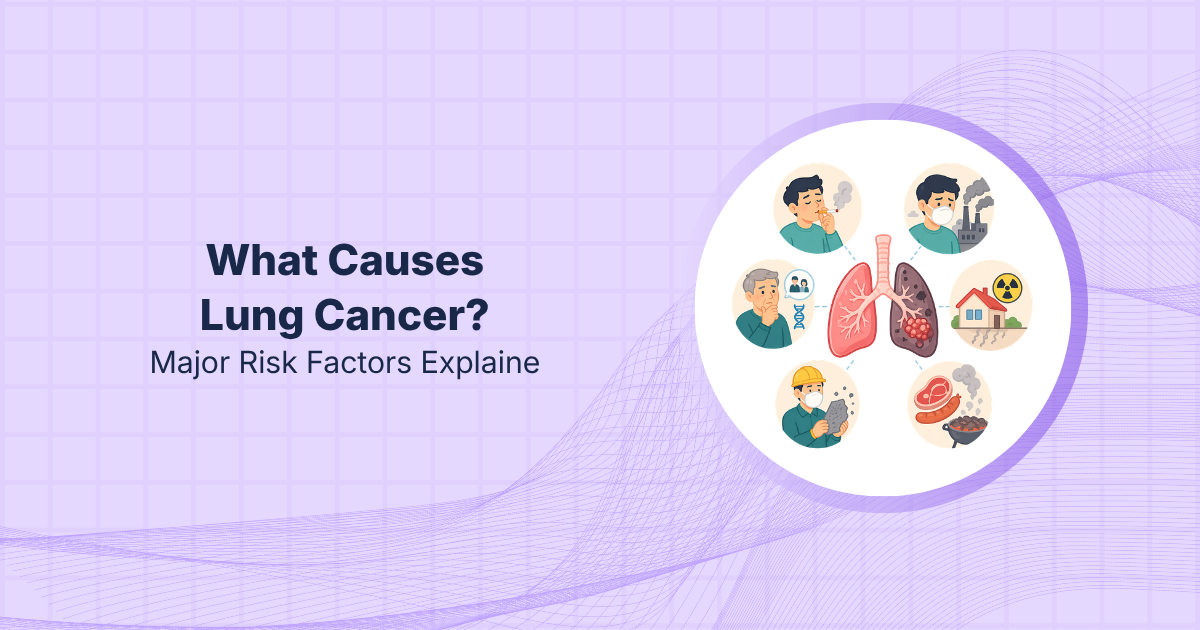
What Causes Lung Cancer? Major Risk Factors Explained
Lung cancer is one of the most important causes of cancer deaths worldwide. It develops when cells in the lungs mutate and grow uncontrollably. Smoking is the biggest cause, but radon gas, workplace chemicals, air pollution, and genetics also play a rolUnderstanding these risk factors can help you take steps to protect your lung health before symptoms appear.
What Are Lung Cancer's Main Causes?
1. Tobacco
Smoking is one of the significant factors causing lung cancer, accounting for roughly 90% of all cases. More than 60 carcinogens are present in tobacco. Carcinogens are substances that cause cancer.
The risk increases with how long you have smoked and how many cigarettes you smoke per day. Smoking more than 25 cigarettes daily can increase your risk by up to 25 times compared to a non-smoker.
The good news is that quitting at any age significantly lowers your risk. Even after decades of smoking, stopping makes a real difference.
2. Secondhand Smoke
You do not have to smoke yourself to be at risk. Regularly breathing in someone else's cigarette smoke - known as passive or secondhand smoke also raises your chances of developing lung cancer.
Individuals who work or live around smokers are especially at risk. Encouraging someone who smokes in your home to give it up or smoke outside will significantly lower your exposure.
3. Radon Gas
Uranium in soil and rock naturally produces radon, a colorless and odorless radioactive gas. Without any warning indications, it can enter homes through foundation gaps and fractures and accumulate to dangerous level. The second common cause of lung cancer is Radon gas. In the United States, approximately 1 in 15 homes has increased radon levels. The risk is even greater for smokers, as radon and tobacco together multiply lung cancer risk significantly.
An easy and crucial precaution is to test your house with an inexpensive radon kit.
4. Chemicals and Carcinogens in the Workplace
Another important risk factor is prolonged exposure to specific drugs at work. Among those most at risk are those employed in manufacturing, transportation, mining, and construction.
Lung cancer is frequently associated with the following occupational carcinogens:
- Asbestos -Used in older buildings and shipbuilding; still a major risk in renovation work.
- Silica- Found in glass making and bricklaying; can cause silicosis, which raises cancer risk.
- Arsenic, nickel, and chromium- Industrial metals associated with increased lung cancer rates.
- Diesel exhaust fumes- Exposure levels are higher for professional drivers and mechanics.
- Always use the proper protective gear and adhere to workplace safety regulations.
5. Pollution of the Air
Lung cancer is known to be caused by prolonged exposure to air pollution, especially the fine particles from automobile exhaust and industrial emissions. About 8% of lung cancer cases are caused by air pollution, according to Cancer Research UK. The individual risk depends on the level and duration of exposure.
6. Family History and Genetics
Having a close relative - a parent or sibling who has had lung cancer increases your own risk. Researchers believe certain inherited genetic variations can make some individuals more susceptible to lung cancer, even without heavy environmental exposure.
If lung cancer runs in your family, inform your doctor. They may recommend earlier screening or closer monitoring.
7. Pre-Existing Lung Conditions
Certain chronic lung diseases can raise the risk of lung cancer. These include:
- Chronic Obstructive Pulmonary Disease (COPD) - Conditions like emphysema and chronic bronchitis are strongly linked to increased risk.
- Idiopathic Pulmonary Fibrosis (IPF) - Scarring of lung tissue has been found to increase the chance of developing lung cancer.
These risks are generally higher in people who also smoke.
How to Reduce Your Risk of Lung Cancer?
- Stop smoking or never start. Discuss with your physician about nicotine replacement therapies, medications, and support programs.
- Avoid secondhand smoke -stay out of smoking areas and encourage smokers around you to quit.
- Test your home for radon - use an inexpensive test kit and act quickly if levels are high.
- Protect yourself at work - always wear the correct protective gear when working around hazardous substances.
- Eat foods rich in fruits and vegetables -these support overall lung health. Avoid high-dose beta-carotene supplements if you smoke, as they may increase risk.
- Get screened if you are high-risk -speak to your doctor about low-dose CT screening, especially if you are a long-term heavy smoker aged 50 or above.
Conclusion
Lung cancer is one of the most common cancers. Common risk factors include smoking, radon exposure, workplace chemicals, and family history - many of which can be managed with the right steps. If you have a persistent cough, unexplained weight loss, or significant risk factors, don't wait. Early detection and treatment can go a long way in treating the deadly condition.