
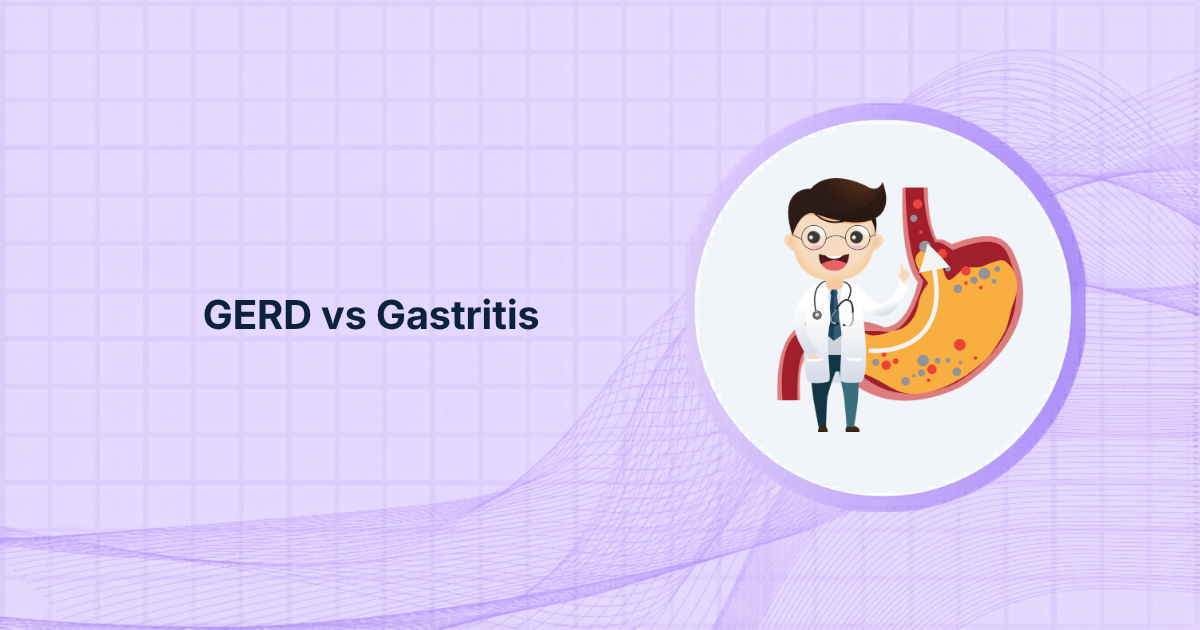
What Is the Difference Between GERD and Gastritis?
GERD and gastritis are the two diagnoses most commonly confused, by their nature they both affect the upper digestive system and cause distress following the ingestion of food and both conditions are relatively common in the community. Despite both having much in common both conditions however have vastly differing aetiologies, pathologies and diagnostic and therapeutic strategies. The distinction between the conditions of GERD and gastritis is considered important by the ACG (2022) for correct and effective treatment.
Understanding what each condition involves makes their differences immediately clear.
GERD occurs when the lower esophageal sphincter (LES) fails to stop stomach acid from flowing back into the esophagus. The problem in GERD is not excess acid production itself but the inappropriate movement of acid from the stomach into the esophagus due to which it causes damage.
Gastritis is inflammation of the stomach lining (gastric mucosa) itself. Gastritis occurs when the protective mucus layer of the stomach is damaged or overwhelmed, allowing stomach acid to irritate and inflame the underlying stomach tissue. The problem in gastritis is inflammation within the stomach rather than acid escaping upward into the esophagus.
What Are the Symptoms of GERD and How Do They Differ From Gastritis?
GERD Symptoms
GERD symptoms reflect acid damage to the esophagus and are characteristically related to meals and posture:
- Heartburn - A burning feeling moving up from the stomach to the chest and throat.
- Regurgitation - A sour or bitter taste on the tongue from food and stomach acid moving back into the throat.
- Chest pain - A pain behind the breast bone often getting worse after eating and when lying flat.
- Laryngopharyngeal reflux (LPR) - LPR symptoms can occur when acid in the stomach reaches the voice box (larynx) causing chronic cough, throat clearing and hoarseness.
- Difficulty swallowing-may occur in later stage illness when the esophagus is inflamed.
Gastritis Symptoms
Gastritis symptoms reflect inflammation within the stomach itself:
- Upper abdominal pain or burning centered in the upper middle abdomen (epigastrium)
- Nausea and vomiting, particularly with acute gastritis
- Feeling of fullness or bloating after eating small amounts of food
- Loss of appetite
- Belching
- In severe gastritis with ulceration: blood in vomit or black tarry stools indicating gastric bleeding
Key Symptomatic Differences
- GERD pain rises upward toward the chest and throat. Gastritis pain is localized in the upper abdomen
- GERD causes regurgitation of acid into the mouth. Gastritis does not typically cause regurgitation
- GERD symptoms are triggered by lying down and bending. Gastritis pain is often relieved rather than worsened by lying down
- GERD causes chronic throat and respiratory symptoms. Gastritis does not cause hoarseness or chronic cough
What Causes GERD and Gastritis?
Causes of GERD
GERD is caused by LES dysfunction allowing acid to reflux into the esophagus. Contributing factors include:
- Obesity increasing intra-abdominal pressure
- Hiatus hernia disrupting the anti-reflux mechanism
- Smoking and alcohol relaxing LES tone
- Pregnancy causing hormonal LES relaxation
- Certain medications including calcium channel blockers and nitrates
Causes of Gastritis
Gastritis has several distinct causes that differ entirely from GERD:
- H. Pylori infection: Globally, the most common cause of chronic gastritis is infection with Helicobacter pylori. The bacteria attach to the lining of the stomach where they induce chronic inflammation of the gastric mucosa.
- Non-steroidal anti-inflammatory drugs (NSAIDs): Regular use of aspirin, ibuprofen, and naproxen damages the gastric mucosa by inhibiting prostaglandin synthesis that normally protects the stomach lining
- Alcohol: Heavy alcohol consumption directly irritates and erodes the gastric mucosa
- Autoimmune gastritis: The immune system attacks the stomach lining parietal cells, causing chronic atrophic gastritis and vitamin B12 deficiency (pernicious anemia)
- Bile reflux: Bile flowing backward from the small intestine into the stomach irritates the gastric mucosa
- Stress gastritis: Acute physiological stress from serious illness, major surgery, or burns causes erosive gastritis
Can GERD and Gastritis Occur Together?
Yes. Gastritis and GERD can co-exist and very often do in the same patient. H pylori infection which leads to gastritis can also result in abnormal LES function which will lead to an aggravation of GERD. NSAID induced gastritis will at the same time irritate the esophagus and lead to an aggravation of GERD symptoms. Obesity and alcohol will predispose to GERD and gastritis independently.
When GERD and gastritis coexist, symptoms will be largely overlapping making differentiation clinically more difficult. Diagnosis would therefore involve an evaluation of the esophagus as well as the gastric mucosa via endoscopy.
How Are GERD and Gastritis Diagnosed?
Diagnosing GERD
- Esophageal pH monitoring: Objectively confirms abnormal acid exposure in the esophagus
- Upper endoscopy: Identifies erosive esophagitis, Barrett's esophagus, and hiatus hernia
- Esophageal manometry: A procedure to assess LES pressure and esophageal motility
Diagnosing Gastritis
- Upper endoscopy: The gold standard for gastritis diagnosis, directly visualizing the gastric mucosa and identifying inflammation, erosions, and ulcers. Biopsies confirm H. pylori infection and assess for atrophic changes
- H. Pylori testing: It can be confirmed with non-invasive tests, namely the Urea Breath Test, Faecal Antigen test and Blood Serology without needing for endoscopy.
- Blood tests: Complete Blood Count can be used to detect anaemia secondary to G.I. Bleeding. The Vitamin B12 levels may show a deficiency secondary to autoimmune gastritis.
How Are GERD and Gastritis Treated?
GERD Treatment
- PPIs are the most appropriate and offer significant acid suppression and enable esophageal healing.
- H2 blockers can provide additional acid suppression in cases of mild GERD and breakthrough nocturnal GERD.
- Lifestyle changes and dietary modification are important and should include weight loss, avoidance of triggers such as fatty food, caffeine, and alcohol, head of bed elevation, and not eating late at night.
- Non surgical intervention could involve LAP fundoplication or LINX placement for refractory GERD.
Gastritis Treatment
Treatment depends on the underlying cause:
- H. Pylori eradication: H. Pylori eradicated in 80-90% of patients with 2 antibiotics (clarithromycin and amoxicillin) and PPI for 7-14 days; gastritis will resolve, peptic ulcer recurrence significantly diminished.
- Withdrawal of NSAID: Withdrawal of NSAIDs, and treatment with PPI for healing mucosal damage is first-line treatment of NSAID induced gastritis.
- PPI therapy: decreases acid secretion and helps gastric mucosa to heal, for any type of gastritis.
- Avoidance of alcohol: crucial for alcoholic induced gastritis.
- Supplementation with vitamin B12: needed for autoimmune gastritis with pernicious anemia.
Conclusion
Both GERD and gastritis have separate diagnostic methods and treatment plans, and correct differentiation between these two diseases will lead to the correct and most successful treatment. Upper endoscopy is the most sensitive investigation when differentiating between the two, or when the two could be occuring concurrently.
If you have persistent upper digestive symptoms including heartburn, upper abdominal pain, or nausea that have not been properly investigated, speak with a gastroenterologist for a comprehensive evaluation.